What Are Dental Veneers?
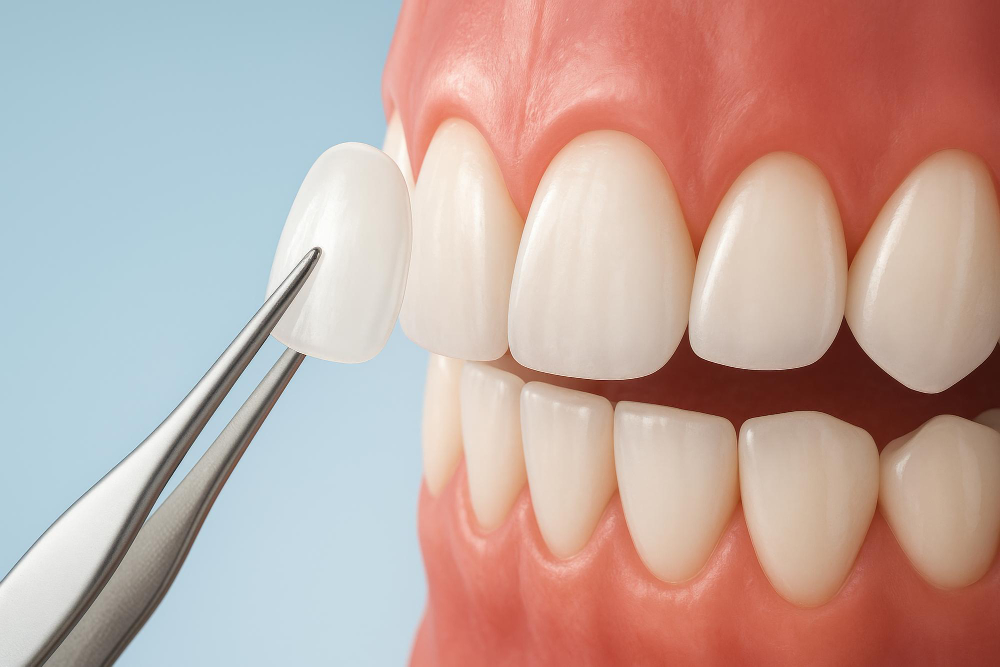
Dental veneers are thin covers placed on the front of teeth. Dentists use them to improve the look of your smile. Usually, veneers are made from porcelain or resin materials. They are custom-made to fit your teeth. Because they look natural, many people choose them for cosmetic reasons. In many cases, they help people feel more confident about their smiles.
Types of Dental Veneers
There are different types of dental veneers. The main types are porcelain and composite resin. Sometimes, other materials are used, but these are less common. Each type has its own benefits and drawbacks.
Porcelain Veneers
Composite Resin Veneers
Other Types
Benefits of Dental Veneers
Dental veneers offer many advantages. They can improve both the look and function of your teeth. For many people, veneers are a simple way to get a brighter, more even smile. In addition, they can help protect teeth from further damage.
Who Can Consider Dental Veneers?
Many people wonder if they are a candidate for dental veneers. Usually, veneers work best for adults with healthy teeth and gums. However, not everyone is a good fit for this treatment. Dentists will check your mouth and talk about your goals before starting.
On the other hand, some people may not be suitable for veneers. For example, those with weak teeth, severe decay, or untreated gum disease may need other treatments first. People who grind their teeth may damage veneers over time.
The Dental Veneer Procedure
Getting dental veneers involves several steps. First, your dentist will examine your teeth and discuss your needs. Next, a small amount of enamel is removed from the tooth surface. This makes space for the veneer. Then, the dentist takes a mold of your teeth. This mold goes to a dental lab, where your custom veneers are made. While you wait, temporary veneers may be placed.
Once your veneers are ready, you return for fitting. The dentist checks the fit and color, then bonds the veneers to your teeth using a special glue. After the procedure, you may feel some mild soreness. However, this usually goes away quickly. Most people can eat and drink as usual after a short time.
Risks and Considerations
Although dental veneers are safe, there are some risks. For example, some people may feel tooth sensitivity after the procedure. Rarely, veneers can chip or come loose. In addition, veneers are not reversible, since some enamel is removed.
To keep your veneers in good shape, brush and floss daily. Avoid biting hard foods like ice or nuts. Visit your dentist for regular checkups. With proper care, veneers can last many years and keep your smile looking bright.
Conclusion
If you are thinking about dental veneers, Chhabarias Oral Maxillofacial Surgery and Dental Clinic is here to help. Book a visit today to discuss your options and find out if veneers are right for your smile.