
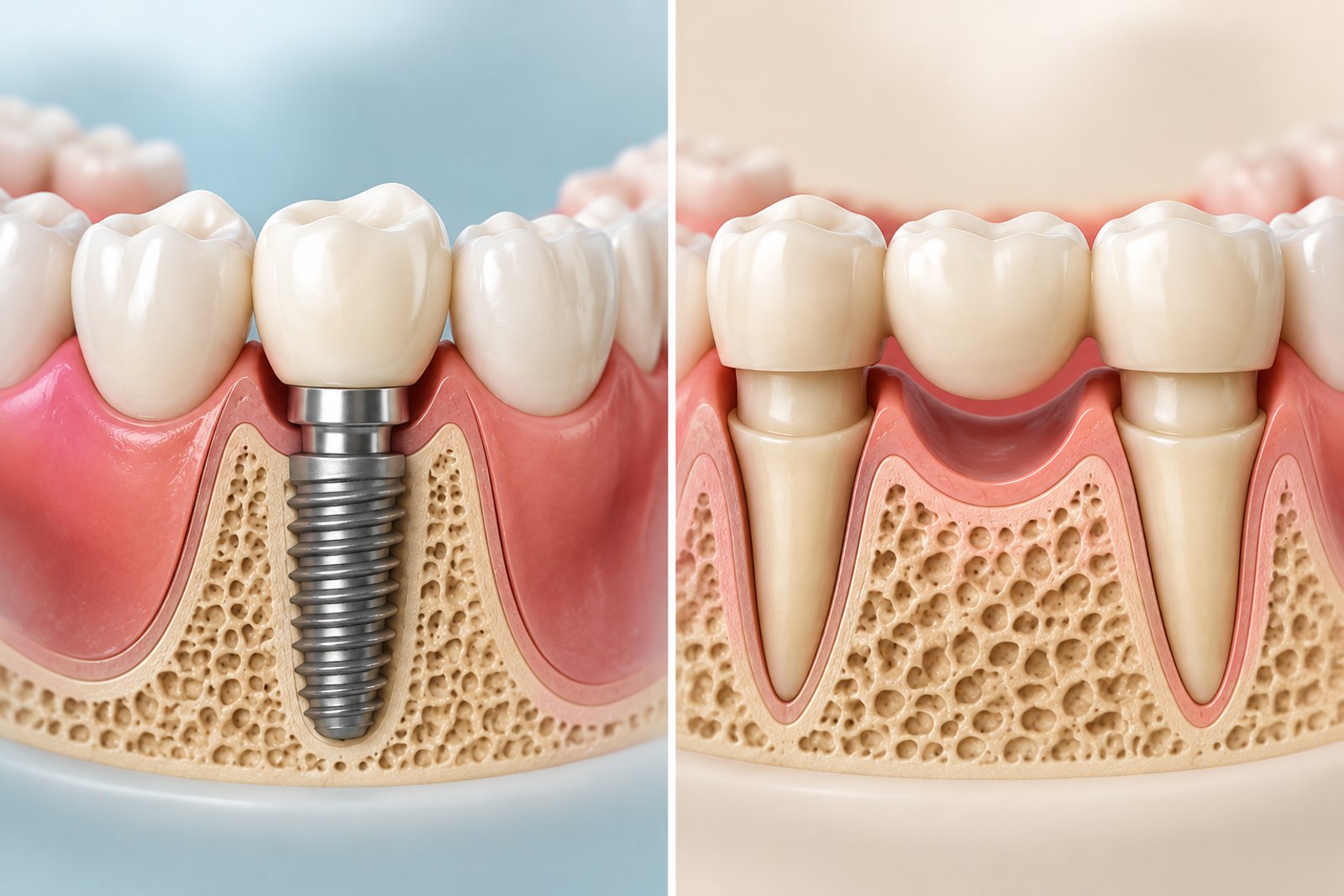
Many people lose teeth due to injury, decay, or gum disease. When this happens, you may wonder about the best tooth replacement options. Two common choices are dental implants and dental bridges. In this guide, we will compare dental implant vs bridge solutions. You will learn how each works, their benefits, and what to consider when choosing the right option for your missing teeth.
What Is a Dental Implant?
A dental implant is a small metal post, often made of titanium. Dentists place it into the jawbone where a tooth is missing. Over time, the bone grows around the implant. This process is called osseointegration. Next, a connector and a crown (an artificial tooth) are attached. As a result, the implant looks and feels like a natural tooth.
What Is a Dental Bridge?
A dental bridge is another way to replace missing teeth. It uses one or more artificial teeth to fill the gap. The bridge is held in place by the teeth on either side of the gap. These teeth, called abutment teeth, are often covered with crowns. Because the bridge sits above the gum, it does not need to be placed in the jawbone.
Key Differences Between Dental Implants and Bridges
Pros and Cons of Dental Implants
Dental implants offer many benefits. However, they also have some drawbacks. Understanding both can help you make the best choice.
Pros and Cons of Dental Bridges
Dental bridges are a popular choice for missing teeth solutions. Still, they have both advantages and disadvantages.
Factors to Consider When Choosing Between Dental Implant and Bridge
When deciding between a dental implant and a bridge, several factors matter. For example, your oral health, bone strength, and budget all play a role. Dentists will check if you have enough bone for an implant. If not, a bridge may be better. Additionally, your age and overall health are important. Some people prefer a faster solution, while others want a longer-lasting fix. Talking with your dentist helps you find the best tooth replacement option for your needs.
Cost Comparison: Dental Implant vs Bridge
Cost is a key part of choosing between dental implant vs bridge. Implants usually cost more at first. However, they may last longer, which can save money over time. Bridges cost less up front, but may need to be replaced sooner. Insurance may cover part of the cost for both options. Prices also vary by location and dentist. The American Dental Association suggests asking for a detailed estimate before starting treatment.
Longevity and Maintenance
Dental implants can last 10 to 20 years or more with good care. In fact, some last a lifetime. You should brush and floss them like natural teeth. Regular dental visits help keep them healthy. On the other hand, bridges often last 5 to 10 years. They may need to be replaced if they become loose or damaged. Cleaning under a bridge is important to prevent decay. Dentists recommend using special floss or brushes for this purpose.
Who Is a Good Candidate?
Not everyone is a good candidate for every missing teeth solution. For dental implants, you need healthy gums and enough bone. People who smoke or have certain health problems may not qualify. For bridges, you need strong teeth on either side of the gap. Children and teens may need to wait until their jaws stop growing. Dentists will review your health history and take X-rays to decide what is best for you.
Frequently Asked Questions About Dental Implants and Bridges
Conclusion:
Missing teeth can affect chewing, confidence, and overall oral health. Dental implants and bridges are common tooth replacement options, but the right choice depends on your oral condition, bone health, and individual needs. A dental evaluation helps determine the most suitable treatment approach.
Looking for the right option to replace missing teeth?
Consult Chhabarias Oral Maxillofacial Surgery and Dental Clinic for expert evaluation and personalised dental implant or bridge solutions.