
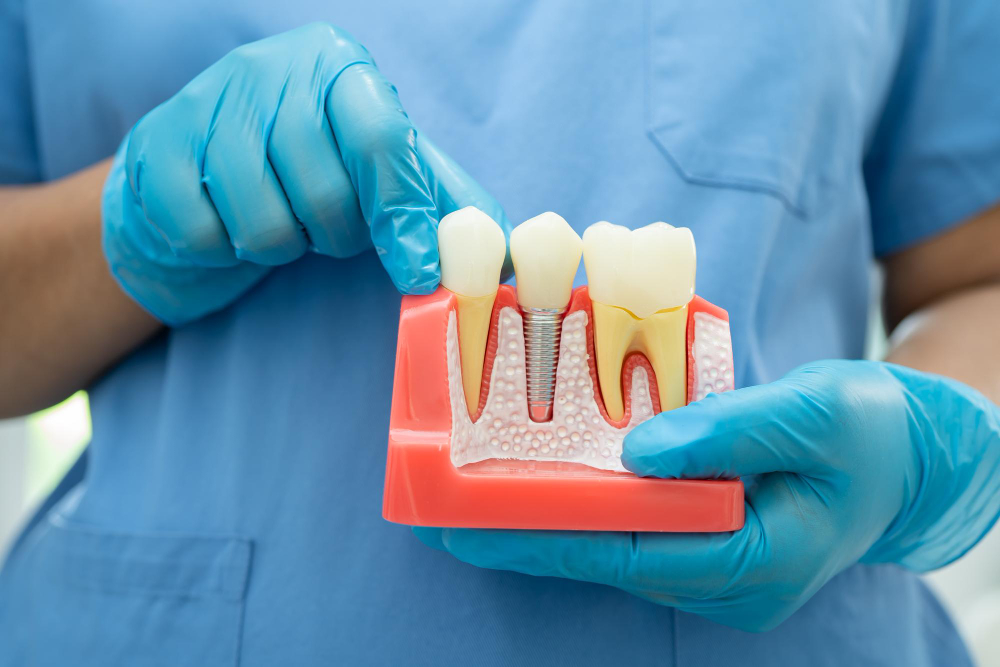
Introduction to Dental Implants
Dental implants are a popular way to replace missing teeth. In fact, the dental implant procedure uses a small metal post to hold a new tooth in place. Many people choose dental implants because they look and feel like natural teeth. For those seeking a lasting solution, dental implants offer many benefits. According to the World Health Organization, good oral health improves overall well-being. Therefore, dental implants can help you eat, speak, and smile with confidence.
Step-by-Step Dental Implant Procedure
The dental implant procedure happens in several steps. First, your dentist checks your mouth and takes X-rays. This helps them plan the treatment. Next, they place a small titanium post into your jawbone. Over time, the bone grows around the post. This process is called osseointegration. It usually takes a few months. After healing, your dentist attaches a connector, called an abutment, to the post. Finally, a custom-made crown is placed on top. As a result, your new tooth looks and works like a real one.
Immediate and Long-Term Benefits of Dental Implants
Dental implants offer many immediate and long-term benefits. Right away, you will notice better chewing and clearer speech. Unlike dentures, implants do not slip or move. In addition, they help keep your jawbone healthy. Over time, dental implants can prevent bone loss. This keeps your face shape natural. Furthermore, implants do not harm nearby teeth. They also last longer than other tooth replacements. According to dental journals, most implants last for many years with proper care.
Long-Term Advantages and Outcomes
Over the years, dental implants show high success rates. Studies from PubMed report that most implants last over 10 years. With good care, many last a lifetime. Because implants fuse with your jawbone, they feel strong and stable. Unlike bridges, implants do not need support from other teeth. This means less damage to your natural teeth. In the long run, dental implants can save you money. You will not need frequent repairs or replacements. For many, this means peace of mind and a lasting smile.
Aftercare and Lifestyle Guidance
Proper dental implant aftercare is important for long-term dental implant success. Brush and floss your teeth every day. Visit your dentist for regular check-ups and cleanings. Avoid chewing hard foods like ice or hard candy. These can damage your new tooth. If you smoke, try to quit. Smoking can slow healing and increase the risk of problems. With good habits, your dental implants can last for many years.
Prevention of Implant Complications
Although dental implants are safe, problems can happen. However, you can lower your risk with simple steps. Always follow your dentist’s advice. Keep your mouth clean to prevent infection. If you notice pain, swelling, or loose implants, contact your dentist right away. Early treatment can stop small issues from becoming big problems. According to the CDC, good oral hygiene is key to preventing infection and implant failure.
Conclusion
Dental implants offer a safe and lasting way to replace missing teeth. They improve your smile, comfort, and health. With proper care, dental implants can last for many years. Consult a dental specialist at Chhabarias Oral Maxillofacial Surgery and Dental Clinic for personalized advice.